
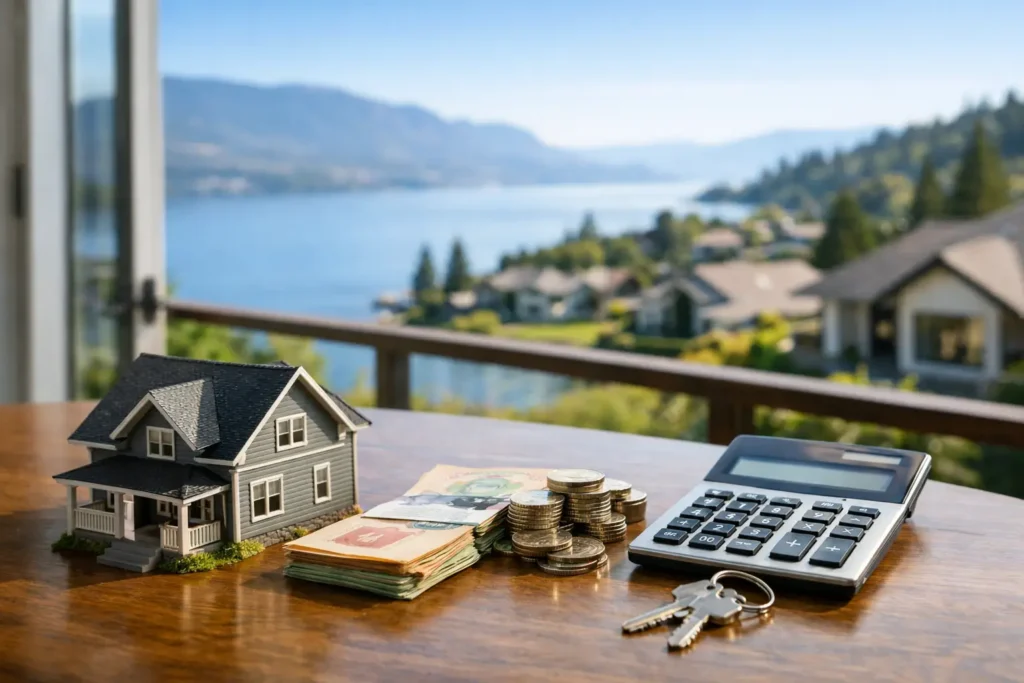
If you miss the mark on price in Kelowna, buyers notice fast. A home that comes out too high can sit, lose momentum, and invite low offers. Price too low, and you may leave money on the table. Knowing how to price your Kelowna home starts with understanding what buyers are comparing, how neighbourhood demand shifts, and why the first few weeks on market matter so much.
Kelowna is not one simple market. A lakeview property in Upper Mission, a family home in Glenmore, a condo near Downtown, and a rancher in West Kelowna all attract different buyers with different expectations. That is why pricing should never be based on a headline about the market or a rough estimate from an online tool. It has to reflect your home, your location, and current buyer behaviour.
Why pricing strategy matters more than testing the market
Many sellers are tempted to list high and see what happens. On paper, that can feel safe. In practice, it often works against you.
When a home is priced above where buyers see value, showings can slow down right away. The buyers who do visit may like the property but hold back because they believe the seller is unrealistic. As the listing sits, it can develop a stale impression. Even strong homes can start to look overlooked when they stay on the market longer than nearby alternatives.
By contrast, well-priced homes tend to create more early interest. That early activity matters because the freshest eyes are on your property in the first days and weeks. If the price feels justified, buyers are more likely to book viewings, compare your home favourably, and make confident offers.
How to price your Kelowna home using the right comparables
The most reliable starting point is a careful review of recent comparable sales. This means homes that have actually sold, not just homes currently listed. Active listings show your competition. Sold listings show what buyers were truly willing to pay.
A good comparable should be close in location, similar in size, style, age, condition, and lot characteristics. In Kelowna, even small differences can have a real effect on value. A home on a quieter street may perform differently than one near a busier road. A property with a usable yard may appeal more to young families, while a condo with stronger amenities may stand out to downsizers or investors.
This is where local knowledge matters. Two homes may look similar on paper but land very differently with buyers. One may have better walkability, school access, lake views, renovation quality, or privacy. Pricing is not just about square footage. It is about how the market experiences the home.
Look at sold, active, and expired listings together
Sold listings should carry the most weight, but they are not the full story. Active listings tell you what buyers are seeing right now. If there are several similar homes competing in your price range, yours needs a reason to stand out.
Expired or cancelled listings are also useful. They can show where the market rejected pricing. If similar homes failed to sell at a certain number, that is a warning sign. It does not automatically mean your home should be listed much lower, but it does mean you need a strong case if you plan to push above recent results.
Adjust for features buyers actually value
Not every improvement adds dollar-for-dollar value. A renovated kitchen, updated bathrooms, newer windows, or a well-finished basement may help support a stronger price. So can outdoor living space, views, suite potential, or modern mechanical updates.
But there are trade-offs. Some upgrades are highly personal and do not return their full cost. A seller may have spent heavily on custom finishes, but buyers may not value them the same way. Pricing should reflect market appeal, not renovation receipts alone.
Neighbourhood trends can change your pricing range
One of the biggest mistakes sellers make is assuming a city-wide average applies to their address. In Kelowna and the broader Okanagan, neighbourhood-level trends can shift quickly.
Buyer demand in family-oriented areas may rise during one season and cool in another. Condos near the core may respond differently to interest rate changes than detached homes in established suburban neighbourhoods. Lake Country, Peachland, Vernon, and West Kelowna each have their own pricing rhythms as well.
That means a pricing strategy should be grounded in hyper-local conditions. If buyers in your area are moving quickly on updated homes under a certain threshold, that matters. If larger homes are taking longer to sell because buyers are more payment-sensitive, that matters too.
Timing affects how to price your Kelowna home
Seasonality still plays a role in the Okanagan, even when demand remains steady overall. Spring often brings stronger buyer activity, especially for families hoping to move around the school calendar. Summer can attract relocation buyers and lifestyle-driven purchasers who want to experience the region at its best. Fall can still be active, though buyers may become more selective. Winter is often quieter, but serious buyers remain in the market.
Your pricing should reflect both market conditions and listing timing. In a more active window, you may have a little more room if the home shows well and meets current demand. In a slower stretch, sharp pricing can be the difference between a prompt sale and a listing that lingers.
This is not about chasing the market. It is about meeting the moment honestly.
Emotion and value are not the same thing
Sellers often know every improvement, memory, and effort behind a home. That is completely understandable. But buyers are making a comparison-based decision. They are weighing your property against other available options and recent sales.
That gap between emotional value and market value can be hard to navigate. It is especially true if you have owned the home for many years, completed major updates, or watched neighbours sell in stronger market conditions. The right price is not a reflection of your care for the home. It is a strategy to get the best possible result in the market that exists now.
The risk of overpricing at the start
A price reduction later rarely has the same impact as strong pricing from day one. Once your home has been on the market for a while, buyers start to ask why. They may assume there is a problem with the property, even when the real issue was simply price.
Overpricing can also reduce your negotiating power. If buyers feel the list price was unrealistic, they may come in further below market than they otherwise would have. Ironically, starting too high can lead to a lower final sale price than pricing properly from the beginning.
That does not mean every home should be priced aggressively low. Some properties are rare enough, updated enough, or well-located enough to justify a premium. The key is whether the premium is supported by evidence and buyer demand, not just hope.
Presentation and pricing work together
Price never exists in a vacuum. Buyers react to the whole package.
If your home is clean, well-staged, professionally photographed, and easy to show, buyers are more likely to see value. If it feels dated, cluttered, or poorly presented, the price may need to account for that. Even small details can affect perception. A bright, fresh, move-in-ready home often earns stronger interest than a comparable property that feels like work.
This is why pricing conversations should include preparation. Sometimes the best pricing decision is paired with a few focused improvements before going live. Sometimes the better decision is to price with the current condition in mind and avoid overinvesting. It depends on the property, the competition, and your goals.
Work toward the price that creates action
The best list price is usually the one that attracts the right buyers quickly, supports strong showings, and creates a credible path to an offer. That may be a precise number just under a key search bracket. It may be a price that positions your home as the best value among similar listings. Or it may be a premium backed by standout features and very little direct competition.
A thoughtful pricing strategy also leaves room for real-world feedback. If showings are strong and buyers are engaged, your price is likely in the right range. If activity is quiet and similar homes are moving, the market is telling you something useful.
For sellers in Kelowna, pricing well is part research, part timing, and part local judgment. That is where experienced guidance can make a meaningful difference. At okrealty, that process starts with understanding not just your property, but the kind of buyer most likely to choose it. When the price makes sense to that buyer, the rest of the sale tends to move more confidently.
The right price does not just protect your value – it puts your home in a position to be chosen.