
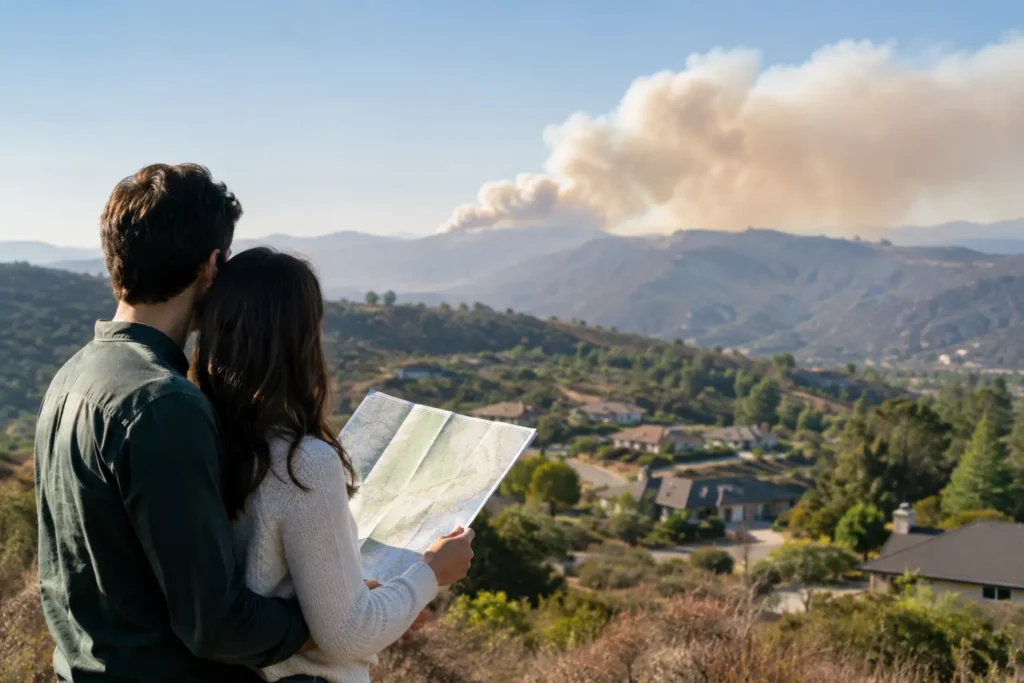
A hillside view, mature pines, and a quiet edge-of-town setting can be exactly what draws buyers to the Okanagan. They can also change how to assess wildfire risk before you write an offer. Wildfire is part of life in many British Columbia communities, but risk is not the same from one neighbourhood, street, or even lot to the next.
For buyers, the goal is not to rule out every home near grassland or forest. It is to understand the property clearly, plan for the practical implications, and make a confident decision that fits your comfort level. For sellers, knowing the questions buyers will ask can help you prepare your home and avoid surprises during a transaction.
Start with the property’s location, not just the municipality
Kelowna, West Kelowna, Lake Country, Peachland, Vernon, and many smaller Okanagan communities each contain a mix of urban neighbourhoods, agricultural land, grasslands, lakeshore areas, and forested slopes. Saying a home is “in Kelowna” or “in West Kelowna” does not tell you enough about its wildfire exposure.
Begin by looking at provincial and local wildfire hazard mapping where available. These resources can identify broad areas of interface risk, meaning places where homes meet or sit close to natural vegetation. They are a useful first screen, but they are not a property-specific guarantee. Map boundaries are broad, conditions change, and a lower-rated area can still have features that make a particular home more vulnerable.
Then look at the immediate setting. Is the home beside a wooded ravine, grassland, an undeveloped parcel, or a large park? Is it on a ridge where wind can move quickly? Does one road provide the only way in and out? A home several blocks from dense vegetation may present a very different situation than a home backing directly onto it, even when both are in the same community.
Topography matters as well. Fire can travel faster uphill, so homes above a vegetated slope deserve a closer look. Valleys and canyons may also funnel wind. This does not mean a hillside property is automatically a poor choice. It means the site should be assessed with more care than a flat lot in a fully built-out neighbourhood.
How to assess wildfire risk at the lot level
Once a home passes your initial location review, shift your attention to the defensible space around it. This is the area where thoughtful landscaping and exterior maintenance can reduce the chance of fire reaching the structure or igniting it from embers.
Walk the property slowly, including the sides and rear yard. Ask what is within the first few metres of the home, not just what is at the back fence. Dry grasses, woodpiles, firewood stored against the house, cedar hedges, overgrown shrubs, bark mulch, and combustible patio furniture can all add fuel close to the building. Pine needles accumulated in gutters, under decks, or along roof edges are another common concern.
Pay attention to the home itself. A non-combustible roof, protected vents, enclosed soffits, screened openings, and well-maintained siding can make a meaningful difference during ember exposure. Embers can travel well ahead of an active fire, which is why a home does not need to be directly in the path of flames to be affected.
Some features should prompt questions rather than immediate rejection. A deck near mature trees, a wooden fence connected directly to the home, or a property bordered by native grass may be manageable if the homeowner has created separation, maintained vegetation, and used suitable materials near the structure. The condition of the property and the willingness to maintain it are just as relevant as its setting.
If you are serious about a home in a higher-exposure area, consider a FireSmart-style property assessment from a qualified local professional. A general home inspection remains essential, but it may not examine wildfire resilience in the same depth. This added step can give you a practical improvement list and a better sense of potential cost.
Ask about evacuation history and access
Wildfire risk is not only about whether a home could be damaged. It is also about what living there may look like during a high-risk season. In the Okanagan, smoke, road closures, evacuation alerts, and evacuation orders can affect daily life even when a property is never directly threatened.
Ask whether the neighbourhood has been subject to previous evacuation alerts or orders and what residents experienced. Previous events do not predict exactly what will happen in the future, but they can reveal useful details about local access, communication, road capacity, and the way an area responds under pressure.
Look at evacuation routes yourself. How many practical exits does the neighbourhood have? Would you need to travel through a steep, wooded, or narrow road corridor? Are there alternate routes if the most direct road is closed? For buyers with children, mobility concerns, pets, horses, or other animals, these questions are especially personal.
It is also sensible to ask about local emergency notification systems and to understand how alerts differ from orders. An alert means residents should be ready to leave on short notice. An order requires people to leave the affected area. Knowing the distinction before an emergency is far less stressful than trying to sort it out while conditions are changing.
Confirm insurance before removing conditions
Insurance is one of the most practical parts of the decision, and it should be addressed early. Availability, deductibles, coverage limits, and policy conditions can vary by insurer, property type, claims history, and wildfire exposure. Do not assume that coverage will be straightforward simply because a home has been insured in the past.
Before subjects are removed, speak with an insurance broker or insurer and provide the full property address. Ask specifically about wildfire coverage, replacement cost, deductibles, any exclusions, and whether the insurer requires property improvements or additional information. If you are purchasing a rural home, a seasonal property, or a home with outbuildings, ask how those details affect the policy.
Buyers should also consider the cost beyond the premium. A larger deductible may be acceptable to one household and uncomfortable for another. Likewise, a property that needs roof work, vegetation management, or vent upgrades may still be a good purchase, but those costs should be part of the overall budget rather than an afterthought.
Review documents, but verify the details
Property disclosure documents, listing information, permits, and past insurance records can provide helpful context. Sellers may disclose known wildfire-related damage, insurance claims, remediation work, or previous evacuation impacts. Buyers should read these materials carefully and ask follow-up questions when something is unclear.
Still, documents are only one part of due diligence. A disclosure is not a replacement for inspecting the site, obtaining insurance confirmation, or checking current information with the appropriate public authorities. Wildfire conditions, hazard assessments, and municipal planning can change over time.
For sellers, preparation is valuable. Clear gutters, remove combustible clutter from beside the home, trim vegetation where appropriate, and keep records of improvements such as roof replacement or FireSmart work. A well-maintained exterior reassures buyers that the property has been cared for with the local environment in mind.
Balance wildfire awareness with the Okanagan lifestyle
Many of the Okanagan’s most appealing homes sit close to trails, vineyards, lakes, orchards, and natural landscapes. Living near those places can involve seasonal smoke or a greater need for property maintenance. The right choice depends on your lifestyle, budget, risk tolerance, and ability to maintain the home over time.
A buyer who wants a lock-and-leave townhouse may prefer a more urban setting with managed landscaping and multiple access routes. Another buyer may gladly choose a rural acreage, knowing it requires more active vegetation management and emergency planning. Neither choice is automatically better. What matters is that the trade-off is visible before you commit.
When comparing homes, do not let wildfire risk become a vague worry or a reason to panic. Turn it into specific questions about location, construction, access, insurance, and maintenance. A knowledgeable local Realtor can help you compare those details alongside the neighbourhood feel, resale considerations, and the everyday lifestyle you want from your Okanagan home.
The best time to ask the harder questions is while you still have choices. A little extra care before an offer can help you find a home that feels not only beautiful, but genuinely comfortable to call your own.