
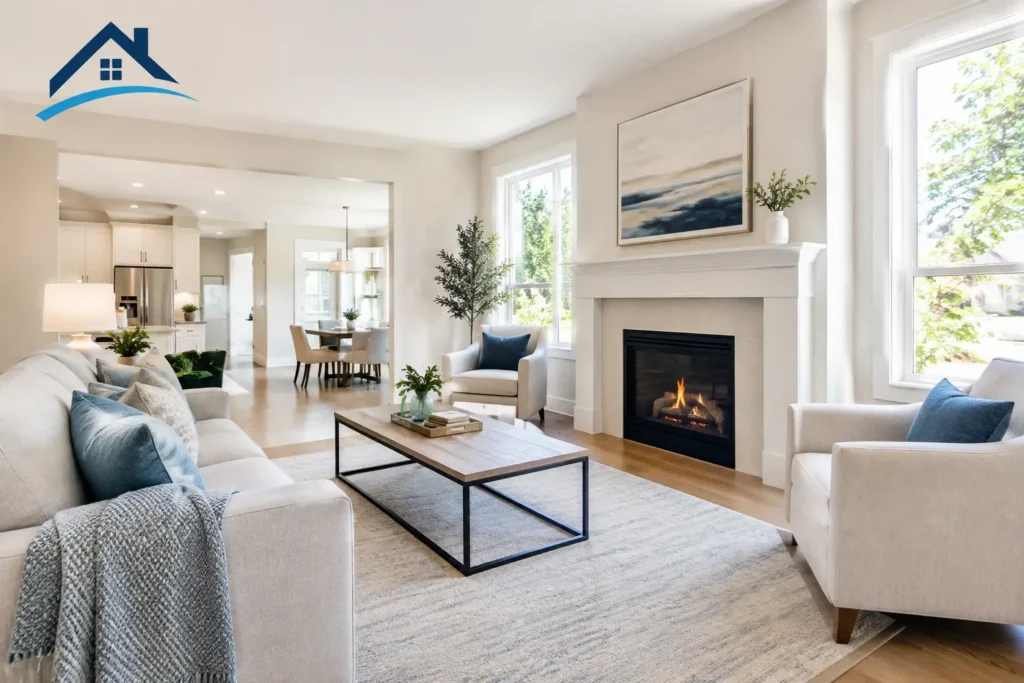
A vacant home can be spotless, freshly painted, and priced well – yet still leave buyers cold. Without furniture, lighting layers, or everyday signs of life, even a generous floor plan can feel smaller than it is. Staging a vacant home for sale gives buyers the visual cues they need to understand how each room could work for their own life.
That matters in the Okanagan, where buyers are often comparing lifestyle as much as square footage. They may be picturing family dinners after a day at the beach, quiet mornings with a lake or vineyard view, space for visiting grandchildren, or a home office that supports a move from a larger city. A vacant property should make that picture easier to see, not ask buyers to imagine every detail on their own.
Why Empty Rooms Often Cost More Than Expected
Buyers do not experience a home as a floor plan. They experience it room by room, often quickly, and they form an emotional impression before they begin comparing features. Furniture establishes scale. A sofa shows that a living room is not awkwardly narrow. A properly sized bed proves that a bedroom can comfortably hold more than a mattress. A dining table answers the quiet question of whether family and friends can gather there.
When these signals are missing, buyers can misread the space. Large rooms may feel echoey and impersonal, while smaller rooms may appear too tight because there is nothing to demonstrate a practical layout. Vacant homes also tend to show more of what is not perfect: scuffed baseboards, an older light fixture, window coverings that need attention, or a floor transition that would barely register in a furnished space.
Online, the difference can be even greater. Listing photos are often a buyer’s first introduction to a home. Empty rooms can photograph flatly, particularly on grey days or in homes with limited natural light. Thoughtful staging gives photography contrast, depth, and a stronger sense of purpose.
Start With the Sale Strategy, Not the Furniture
The right approach depends on the home, the likely buyer, the condition, and the price range. A newer West Kelowna townhome marketed to professionals needs a different look than a Lake Country family home or a downsizing-friendly property in Summerland. The goal is not to decorate according to personal taste. It is to support the story the property is already telling.
Before choosing furnishings, identify the rooms that will most influence a buying decision. For most homes, that is the living room, kitchen or eating area, primary bedroom, and one additional room with clear lifestyle value. That fourth room might be a home office, family room, guest room, or a lower-level recreation space.
A seller does not always need to stage every square foot. Full staging often makes sense when a home is vacant, higher priced, newly renovated, unusually laid out, or competing with polished listings nearby. Partial staging can be a sensible choice when the main living spaces are the priority and the budget is tighter. What should be avoided is a halfway approach that leaves key rooms empty and others sparsely furnished without a clear plan.
Staging a Vacant Home for Sale Room by Room
Give Every Important Room One Clear Purpose
The most useful staging decision is often the simplest: make every room easy to name. Buyers should not have to wonder whether a space is intended as a dining room, a den, or an awkward pass-through. A clear purpose helps the home feel more functional and helps buyers remember it after they have toured several properties.
In an open-concept main floor, use furniture placement to create gentle zones. An area rug and seating arrangement can define the living room, while a dining table anchors the eating space. Keep pathways open, especially between the kitchen, patio door, and main living area. In Okanagan homes where patios, decks, and views are selling features, the transition to outdoor space should feel natural rather than blocked.
Use Furniture That Shows Scale, Not Excess
Oversized furniture is one of the quickest ways to make a room feel smaller. On the other hand, furniture that is too slight can make a home feel temporary or unfinished. Staging should show a comfortable, believable use of space.
A primary bedroom generally benefits from a properly proportioned bed, bedside tables, simple bedding, and enough room to walk around the furniture. In a smaller secondary bedroom, a single bed and a compact desk may present better than forcing in a larger bed. If the likely buyer may have children, a staged bedroom can quietly confirm that the home works for family life without becoming overly themed.
Keep accessories restrained. A few cushions, a throw, artwork, greenery, and a simple tabletop arrangement are usually enough. The home should feel warm, but buyers need visual room to project their own belongings and style onto it.
Let Light Do Some of the Work
Vacant homes can feel stark under a single ceiling fixture. Use lamps in living rooms and bedrooms to soften corners and create a welcoming evening atmosphere for late-day showings. Replace burned-out bulbs, match bulb colour temperatures where possible, and open blinds and curtains before photography and appointments.
Natural light should be treated as a feature, particularly in a region known for bright summers and outdoor living. Clean windows thoroughly. If a view is a selling point, frame it rather than competing with it. Heavy furniture, cluttered decor, or bulky window treatments can pull attention away from the very feature buyers came to see.
Do Not Stage Around Unfinished Work
Staging is not a substitute for preparation. Buyers will notice a dripping tap, loose door handle, damaged screen, worn caulking, or neglected yard long before they remember a decorative tray on the coffee table. Complete small repairs first, then clean deeply, including inside appliances, closets, light fixtures, and windows.
Exterior presentation matters just as much with a vacant home. An unoccupied property can quickly look forgotten, especially during a hot, dry stretch or a wet shoulder season. Keep the lawn maintained, remove flyers and debris, trim back overgrown shrubs, and make the entry feel cared for. A clean doormat, working exterior lights, and a tidy front door create reassurance before buyers step inside.
If a property will be vacant through winter, pay particular attention to snow clearing, safe walkways, heating, and regular check-ins. These practical details protect the home and signal that the sale is being managed responsibly.
Photograph the Staged Home Properly
Staging delivers its best return when it is carried through to the listing photos and showing experience. Photograph after the furniture, artwork, lighting, and window treatments are in place. Rooms should look lived-in enough to feel inviting, but not so styled that images appear busy on a phone screen.
For photos, remove personal staging extras that do not add to the composition. Cords, tags, spare pillows, cleaning supplies, and excess decor can distract from the room. Make beds crisp, straighten chairs, turn on lamps where appropriate, and check each angle for reflections or visual clutter.
If the property has a standout deck, yard, lake glimpse, mountain view, or nearby access to trails and amenities, make sure the home is prepared to connect with that lifestyle. An outdoor dining set or a pair of well-placed chairs can help buyers understand that a patio is an extension of the living area, not simply an empty slab of space.
Is Virtual Staging Enough?
Virtual staging can improve online photos of an empty home, particularly when budget or timing makes physical staging difficult. It can help buyers see a possible layout and may generate more interest before a showing. But it has a limitation: the home is still empty when people walk through the door.
For some properties, that trade-off is acceptable. A condominium with a straightforward layout, a lower-priced home, or a listing requiring a fast launch may benefit from virtual staging combined with excellent cleaning, lighting, and photography. For a property where room scale is a concern, the layout is unconventional, or the listing depends on an emotional first impression, physical staging is usually more persuasive.
If virtual staging is used, be transparent that the images are virtually staged and ensure the furniture proportions are realistic. Buyers should feel pleasantly confirmed when they arrive, not disappointed that the space looks different from the photos.
Keep the Home Ready Once It Is Staged
A staged vacant home still needs ongoing attention. Visit regularly to check temperature, lights, odours, mail, landscaping, and the general condition of the property. Ask your Realtor for feedback after showings, especially if multiple buyers mention that a room feels small, dark, or unclear in purpose. Sometimes a modest furniture adjustment can solve a concern that is affecting interest.
The best staging does not try to convince buyers that a home is something it is not. It helps them see what is already there: the comfort of the living room, the usefulness of the extra bedroom, the ease of the kitchen, and the lifestyle waiting just beyond the back door. When the space feels cared for and easy to understand, buyers can spend less time imagining the basics and more time imagining themselves at home.