
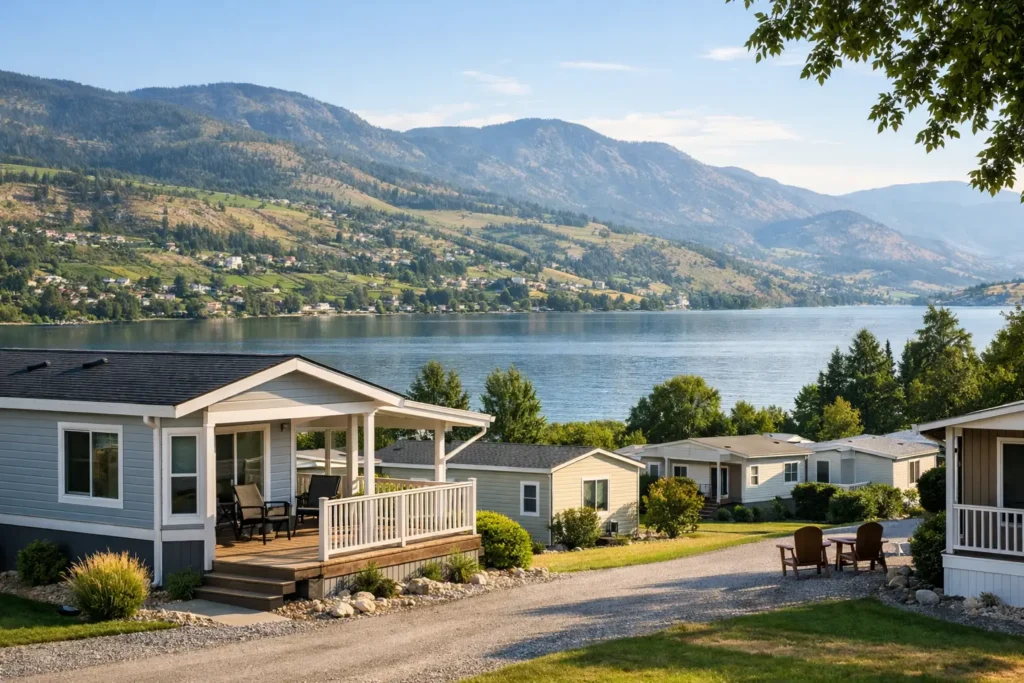
A well-kept manufactured home near the lake, vineyards, walking trails, and everyday services can offer a different path into Okanagan living. For many buyers, mobile homes in Okanagan BC make it possible to prioritize lifestyle, location, and a manageable home without taking on the purchase price of a detached property on its own lot.
That affordability can be meaningful, but it comes with a different set of questions. The home, the land beneath it, the park rules, the monthly pad rent, and the resale market all need to be considered together. A good purchase is not simply about finding the lowest listing price. It is about finding a home and community that continue to work for your budget and your plans over time.
Why Mobile Homes in Okanagan BC Appeal to Buyers
The Okanagan attracts people for understandable reasons: a milder climate, access to lakes and recreation, active communities, and a pace of life that can feel more relaxed than larger urban centres. Kelowna, West Kelowna, Lake Country, Peachland, Vernon, and smaller surrounding communities all offer their own version of that lifestyle.
For retirees, a manufactured home can provide a lower-maintenance option with enough space for visiting family, gardening, and enjoying the outdoors. For first-time buyers, it may be a more attainable way to establish a home base in the Valley. Some buyers are also downsizing from a larger house and would rather put their time and money toward travel, golf, skiing, or spending time with family than maintaining a large yard.
Many homes are located in established manufactured home parks with a sense of community. They can be close to shopping, transit, medical services, beaches, or regional trails. The right location depends on your routine. A buyer who wants to be close to Kelowna amenities may look at parks in or near the city, while someone seeking a quieter setting may prefer Peachland, Lake Country, or communities farther north toward Vernon.
Understand What You Are Buying
The phrase “mobile home” is commonly used, although many properties are technically manufactured homes. The key question is whether you are buying the home only or the home together with the land.
In many Okanagan manufactured home parks, you own the structure but lease the pad it sits on. That means the purchase price may be lower than a freehold house, but you will pay monthly pad rent in addition to your mortgage, property taxes, insurance, utilities, and maintenance. In some cases, water, sewer, or garbage collection may be included in pad rent. In others, they are billed separately. Ask for a clear breakdown rather than relying on assumptions.
A home on leased land is not automatically a poor investment or the wrong choice. It simply needs to be evaluated differently from a detached home on freehold land. Resale value can be influenced by the condition and age of the home, the park’s reputation, location, pad rent, park rules, and buyer demand at the time you sell.
Some manufactured homes are located on privately owned land, which is a different ownership structure and often carries a higher price. Knowing the distinction early will help you compare properties fairly.
Park Rules Matter as Much as the Home
A manufactured home park is a neighbourhood, but it is also governed by a tenancy agreement and park rules. Before removing conditions, buyers should read the documents carefully and understand what is permitted.
Age restrictions are common. Some parks are designed for adults or retirees, while others welcome families. Rules may also address pets, the number of occupants, parking, storage sheds, fencing, exterior improvements, and whether a buyer can rent the home to someone else. If you have a dog, need room for a trailer, or expect adult children to stay for extended visits, those details matter.
Most parks require the prospective buyer to be approved by park management. Approval should not be treated as a last-minute formality. It is an essential condition of the purchase process and should be addressed promptly.
It is also wise to ask about the history of pad rent increases, any planned park improvements, and the condition of shared infrastructure. While provincial rules offer important tenant protections, buyers should still understand the long-term setting they are choosing. A park with good management, a stable community, and well-maintained common areas can make daily life more enjoyable and support future resale appeal.
Budget Beyond the Listing Price
A lower purchase price is often the first reason buyers consider this type of housing. The fuller monthly picture is what determines whether the home truly fits.
Start with your mortgage payment, if financing is required, then add pad rent, property taxes, insurance, utilities, and expected maintenance. Older homes may need upgrades to plumbing, electrical, windows, roofing, heating, or insulation. Those costs do not mean an older home should be avoided. A well-cared-for home with documented updates can be an excellent option. The point is to budget for its actual condition, not just its asking price.
Financing and insurance can be more limited for older manufactured homes or homes on leased land. Lender requirements may vary according to the home’s age, foundation, location, and whether the land is included in the purchase. Speaking with a mortgage professional early helps avoid disappointment after you have found a property you like.
When comparing two homes, look beyond the difference in list price. A newer home with higher pad rent may suit one buyer better than an older home with lower monthly costs but significant upcoming repairs. There is no universal best choice. Your timeline, savings, income, and willingness to renovate all affect the answer.
Inspection Is Especially Valuable
A professional home inspection is a sensible step for any property, and it is particularly helpful when considering a manufactured home. The inspection should focus on the systems that affect comfort, safety, and future expense: the roof, structure, foundation or tie-downs, plumbing, electrical panel, heating and cooling, insulation, windows, and signs of moisture.
The Okanagan’s hot summers and cooler winter stretches make efficient heating and cooling worth close attention. Ask about the age and service history of the furnace, heat pump, air conditioner, and hot water tank. If the home has an addition, enclosed porch, or deck, confirm that it is in good condition and complies with park requirements where applicable.
A seller’s disclosure and records for major upgrades can provide useful context, but they do not replace an inspection. If the inspection identifies concerns, your Realtor can help you assess whether the issues are manageable, whether a price adjustment is appropriate, or whether it is wiser to continue searching.
Choosing the Right Okanagan Community
Location remains central, even when the home itself is more modestly priced. Kelowna offers proximity to employment, restaurants, healthcare, airport access, and city amenities. West Kelowna can appeal to buyers who want lake views, wineries, and convenient access to Kelowna while living on the west side of the bridge.
Lake Country offers a quieter, more rural-feeling setting between Kelowna and Vernon, with access to lakes and outdoor recreation. Peachland has a strong small-town, lakeside character that appeals to many downsizers. Vernon provides another attractive option, particularly for buyers who want a broader range of services and access to the North Okanagan.
Rather than choosing solely by municipality, think about the drives you will make every week. Visit the area at different times of day. Notice road access, nearby grocery stores, medical appointments, transit, walking routes, and noise levels. A home that looks appealing online may feel very different once you have spent time in the immediate neighbourhood.
Questions to Ask Before You Write an Offer
Before moving ahead, make sure you have clear answers about the ownership structure, current pad rent and what it includes, park approval requirements, pet and age restrictions, utility costs, recent upgrades, and available financing. Ask for the tenancy agreement, park rules, and any relevant documents early enough to review them without pressure.
A local Realtor can help put those answers into context. Kathleen Stroeder and the okrealty team understand that the right Okanagan home is not just about square footage. It is about choosing a community, monthly costs, and a property type that supports the way you want to live.
The best manufactured home purchase is one that feels comfortable on move-in day and still makes sense after you have accounted for the rules, recurring costs, condition, and location. With careful questions and local guidance, it can be a practical way to make the Okanagan lifestyle your own.