
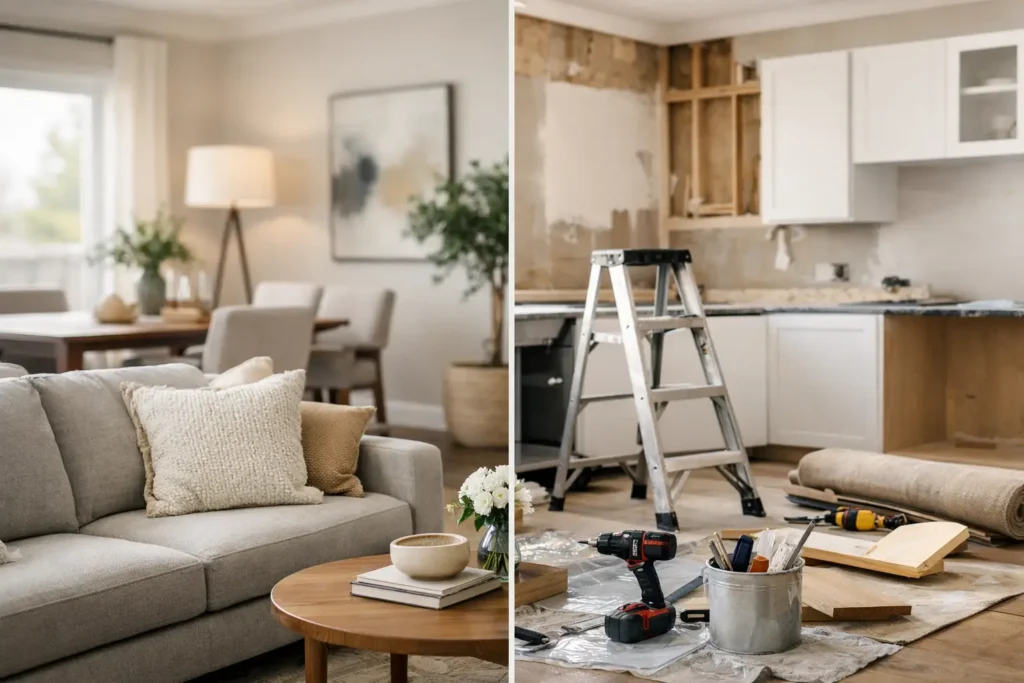
A dated vanity, a bold feature wall, an empty living room – each can change a buyer’s first impression of a home. But that does not mean every seller should start a renovation project. When weighing staging versus renovating before sale, the right choice comes down to what your property needs to compete, what buyers in your Okanagan neighbourhood expect, and whether the work is likely to return more than it costs.
For many Kelowna and Okanagan sellers, the strongest pre-sale strategy is not a complete makeover. It is a focused plan that removes buyer objections, highlights the home’s best features, and keeps the sale timeline and budget under control.
Staging versus renovating before sale: the key difference
Staging is about presentation. It helps buyers understand how rooms function, notice natural light, and picture daily life in the home. It may involve decluttering, furniture placement, neutral accessories, fresh linens, improved lighting, and professional photography. In a vacant property, rented furnishings can give an empty room scale and purpose.
Renovating is about the property itself. It can range from paint and new cabinet hardware to replacing flooring, updating a kitchen, repairing a roof, or modernizing a bathroom. Renovations may solve an actual condition issue, but they also carry more cost, disruption, and risk.
The distinction matters because buyers do not pay extra simply because a seller spent money. They pay for a home that feels well cared for, suits their priorities, and compares favourably with the other homes available. A $40,000 kitchen renovation may be worthwhile in one setting and difficult to recover in another, especially if the choices do not suit the likely buyer.
When staging gives the better return
Staging is often the first place to invest when a home is clean, functional, and reasonably current but is not showing at its best. This is particularly true for homes with good layouts, attractive outdoor areas, lake or valley views, or desirable locations near Kelowna amenities, schools, wineries, trails, or the waterfront. The goal is to make those strengths immediately visible.
A staged home does not need to look like a showroom. It needs to feel spacious, welcoming, and easy to understand. Removing oversized furniture can make a modest family room feel more usable. Defining a spare room as an office or bedroom helps buyers see its potential. On an Okanagan property, styling a patio, deck, or backyard seating area can help buyers connect with the outdoor lifestyle they came here for.
Staging is also a sensible choice where personal décor is likely to distract. Highly specific paint colours, crowded shelves, large collections, and furniture that blocks windows can pull attention away from the home. Neutralizing these elements is usually less expensive and less risky than a major renovation.
Professional photography, careful preparation, and staging work together. Buyers commonly form their first opinion online, then decide which homes deserve an in-person viewing. Strong presentation helps a listing earn that attention, but it must accurately reflect the home once buyers arrive.
When renovating before sale is worth considering
Renovation makes more sense when a condition issue could cause buyers to discount the property, hesitate during a viewing, or worry about an expensive project after possession. Peeling exterior paint, damaged flooring, a leaking fixture, broken cabinet doors, worn caulking, outdated lighting, or an obviously unfinished repair can create a larger negative impression than the cost of fixing it.
Start with repairs and maintenance. Buyers tend to notice signs that a home has been neglected, even when the underlying issue is small. A clean furnace room, working doors and windows, secure railings, repaired drywall, and tidy mechanical areas quietly support confidence in the rest of the home.
After essentials, consider modest updates with broad appeal. Fresh neutral paint, modern light fixtures, new door hardware, refreshed landscaping, and professionally cleaned grout can shift a home from tired to move-in ready. These improvements often support staging because they create a clean background for furnishings and photos.
Larger renovations require more caution. Kitchens and bathrooms are powerful selling spaces, but they are also personal. One buyer may love a dramatic tile choice while another sees it as something to replace. If cabinetry and layout are sound, refinishing, new hardware, a contemporary faucet, improved lighting, and a durable counter update may offer a better balance than a full demolition.
A major project can be justified when comparable homes in your price range have clearly moved beyond yours in finish and condition. It may also be necessary if an issue affects financing, insurability, safety, or buyer confidence. In those cases, the question is less about adding value and more about preventing a substantial price reduction or a failed sale.
Your neighbourhood and buyer matter
The best answer is rarely the same across the Okanagan. A downtown Kelowna condo, a family home in Glenmore, an acreage near Lake Country, a West Kelowna view property, and a retirement-friendly home in Vernon attract different buyers with different expectations.
For example, buyers looking for a newer condominium may place a premium on a crisp, updated interior and may be less forgiving of original finishes. Buyers seeking a larger home with a yard may care more about functional bedrooms, storage, curb appeal, and outdoor living. At a higher price point, buyers may expect a level of finish that aligns with competing homes, but even then, over-improving beyond the local market can limit your return.
Timing also matters. If you need to list soon, a well-executed refresh and staging plan may be more effective than delaying the sale for an ambitious renovation. If the market is giving buyers more choice, addressing visible condition issues becomes more important. A local review of current competing listings, recent sales, and buyer feedback can help separate worthwhile work from expensive guesswork.
A practical way to make the decision
Before approving any work, view your home through a buyer’s eyes. Walk from the street to the front door, then through each room. Ask what feels unfinished, cramped, dark, dated, or difficult to maintain. Next, identify what makes the home memorable in a positive way: a bright kitchen, a covered deck, mature landscaping, a view, a flexible lower level, or proximity to a favourite Okanagan community feature.
Then divide potential projects into three groups. The first is necessary repairs. The second is low-cost presentation work, such as paint, cleaning, lighting, decluttering, and staging. The third is optional renovation, where the likely resale benefit needs to be measured against cost and time.
Be especially careful with projects that are hard to reverse or highly dependent on personal taste. Replacing a worn carpet with a neutral, durable option is different from installing luxury finishes throughout a home where buyers may prefer to choose their own style. If a renovation will not be complete before photography and showings, it can create more stress than value.
Spend where buyers can see and feel the difference
A thoughtful pre-sale budget usually starts at the curb and continues through the entry, kitchen, main living area, primary bedroom, and outdoor spaces. These are the areas that shape the emotional experience of a showing. They are also the spaces most likely to appear in listing photos.
Do not overlook cleaning and small details. Clean windows can transform a view. Fresh mulch, trimmed shrubs, and a clear walkway improve curb appeal. Replacing burned-out bulbs, touching up scuffed baseboards, and removing excess items from closets can make the home feel better maintained and more spacious.
For sellers who are still living in the property, the plan should be realistic. An immaculate staged home that cannot be maintained through showings is not helpful. Choose a setup that your household can manage, especially with children, pets, or a busy work schedule.
An experienced local Realtor can provide a room-by-room perspective before you spend. At okrealty, that conversation is tailored to the home, the community, the likely buyer, and the properties you will be competing against – not a generic renovation checklist.
The aim is not to create someone else’s dream home at your expense. It is to present your home with clarity and care, so the right buyer can recognize its value the moment they walk through the door.